
MiniMed begins shipping Flex in Europe: the first app-controlled insulin pump for diabetes with CE marking
The MiniMed Flex system, a screenless insulin pump integrating the SmartGuard algorithm and managed via mobile app, has been launched in Europe. It is indicated for patients aged two years and older with diabetes (type 1 and type 2) and during pregnancy.
This English text is an automatic translation of the Italian original, which remains the reference. Read the original in Italian.
MiniMed has commenced commercial shipments of the MiniMed Flex system throughout Europe, marking the company's entry into app-controlled insulin delivery. This is the most compact automated insulin delivery (AID) system developed to date: a screenless microinfusor integrating the SmartGuard algorithm (already present in the MiniMed 780G system), capable of automatically adjusting insulin delivery every five minutes based on real-time glucose values. The device, the size of two stacked insulin vials and with a capacity up to 300 units, is managed entirely via a mobile app compatible with iOS and Android. It includes Meal Detection technology for automatic corrections in case of forgotten meals. MiniMed Flex has CE marking for use in patients aged two years and older with diabetes treated with insulin (type 1 and type 2), including during pregnancy. It is compatible with the Simplera Sync sensor and will be compatible with Abbott's Instinct sensor in 2027. This is an advanced hybrid closed-loop system, not fully automated, as it requires the user to announce meals. The launch follows shortly after FDA approval for the Fit model and Medtronic's closure of its trade-in offer.
Text written with the support of artificial intelligence, based solely on the source indicated.
Primary source: https://www.mddionline.com/diabetes/minimed-begins-european-shipments-of-flex-its-first-app-controlled-insulin-pump
Related news
 Diagnostic imaging
Siemens Healthineers: OPTIQ AI on ARTIS angiography systems, exposure control based on CNR and noise reduction with artificial intelligence
The OPTIQ AI imaging chain regulates exposure based on the contrast-to-noise ratio (CNR) to maintain image quality according to the ALARA principle. It includes AI algorithms for noise reduction, exposure optimisation for metallic materials, and advanced functions such as DSA Roadmap.
 Diagnostic imaging
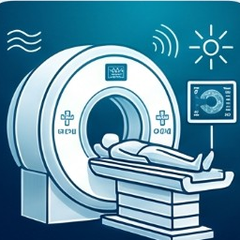
TracInnovations unveils TracPoint: markerless motion tracking system for brain MRI
The platform detects patient head movements in real time during brain MRI, displaying data and a video on a touch monitor to enable immediate intervention by the technologist. The device requires no markers or additional hardware within the scanner tunnel and is currently awaiting CE certification.
 Telemedicine and DTx
Princess Royal University Hospital: 3D virtual tour for neonatal unit, informational tool for parents
The King's College Hospital NHS Foundation Trust has launched an interactive 360-degree tour of the Local Neonatal Unit (LNU), accessible online to allow parents to familiarise themselves with the facilities and medical equipment before their visit, reducing stress associated with entering an unfamiliar environment.